
How Sequential Narrative Panels Work -
Panels use vibrant images combined with text to create a sequence or narrative. They are at their core a series of diagrams. Each panel conveys an idea, a concept, or movement.
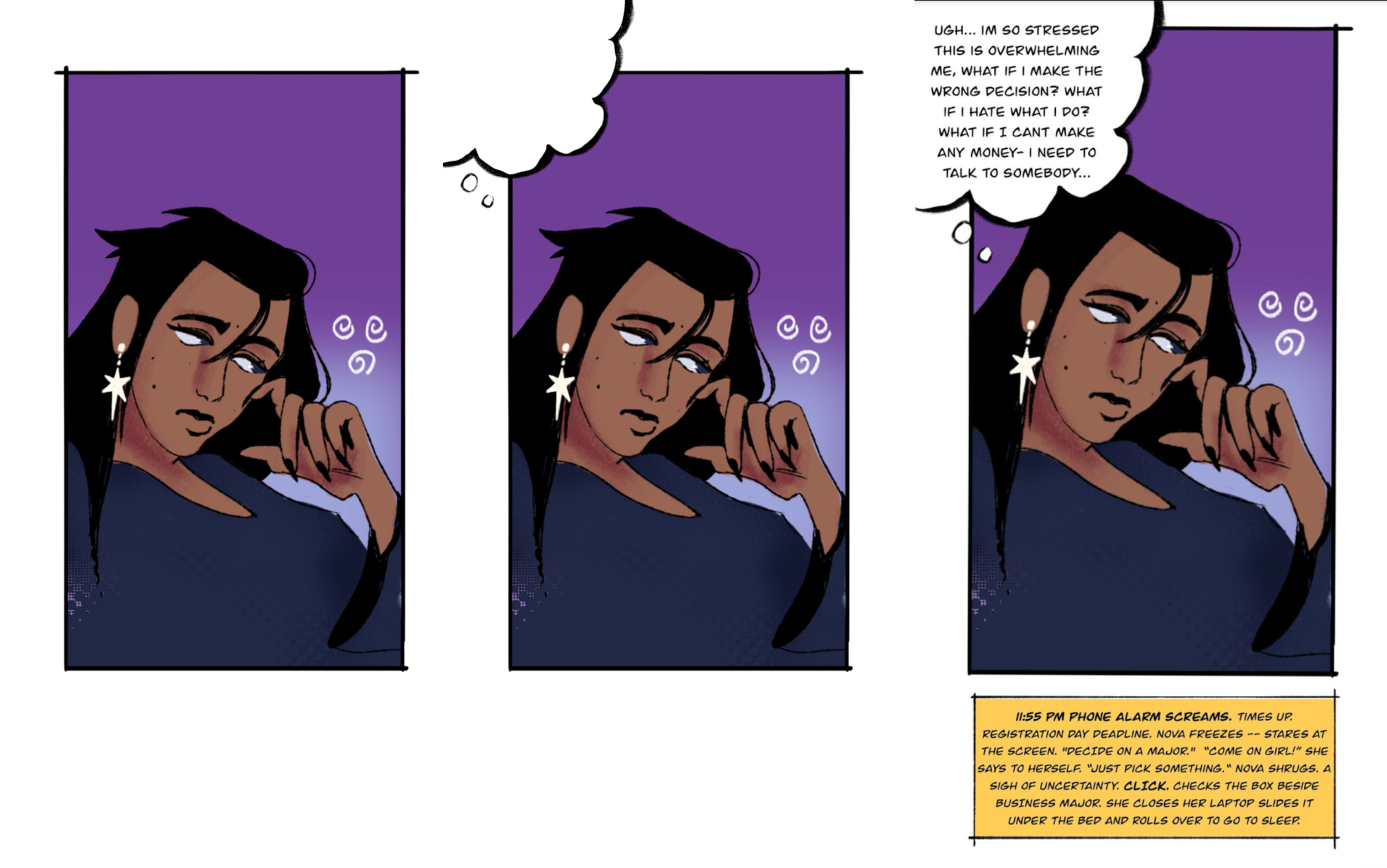
Blanks in between panels are what we call the gutters.
Think of gutters as an imaginative playground space. This is where a reader's mind can create connections between the concepts.
Panels teach relational knowledge, a skill crucial for deeper learning.
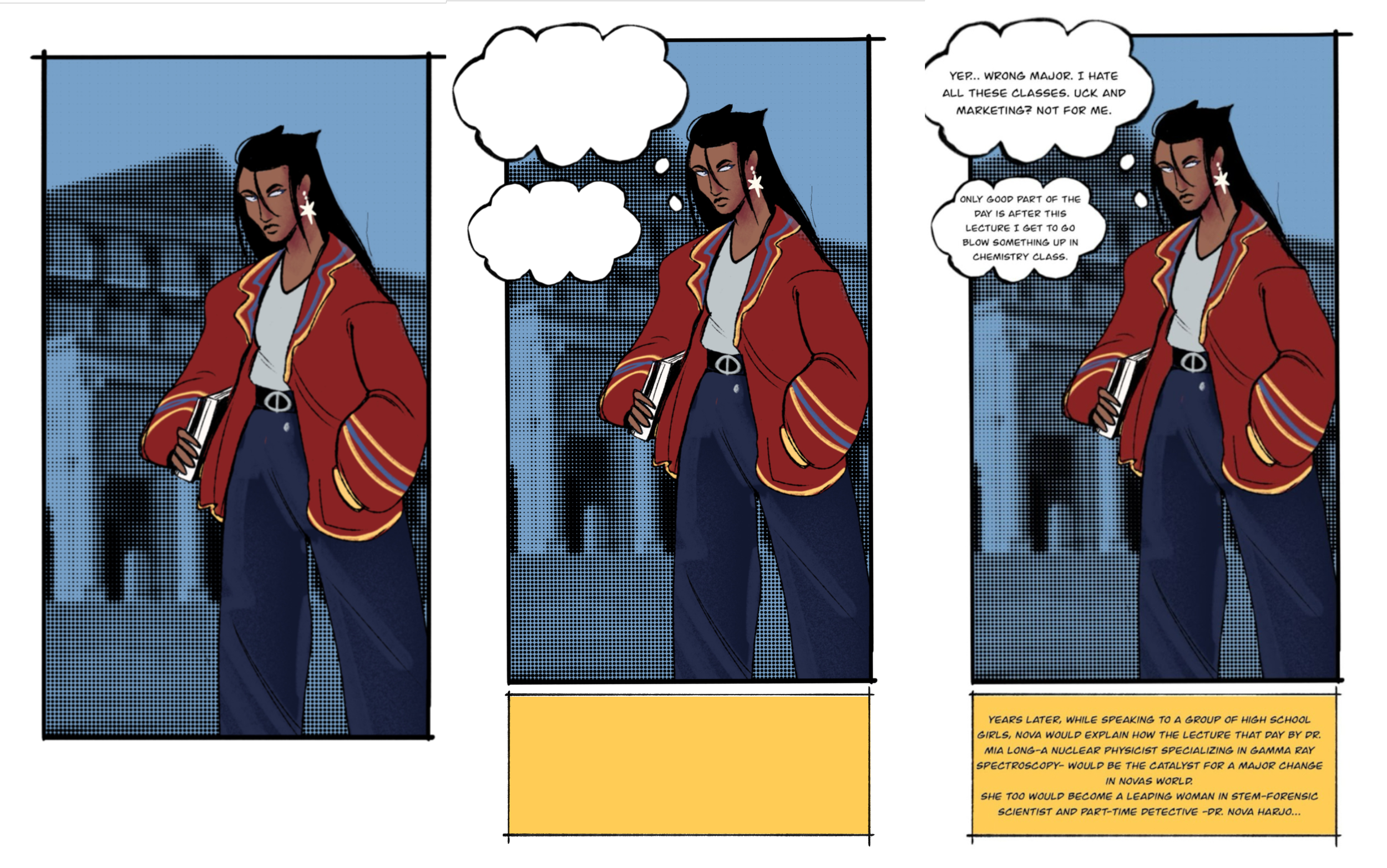
Simple and stylized, narrative panels are a beloved teaching tool.
We created all our original storylines and illustrations by hand. No AI.
Our superstar character Nova is iterative and one of our most popular, original cast members!
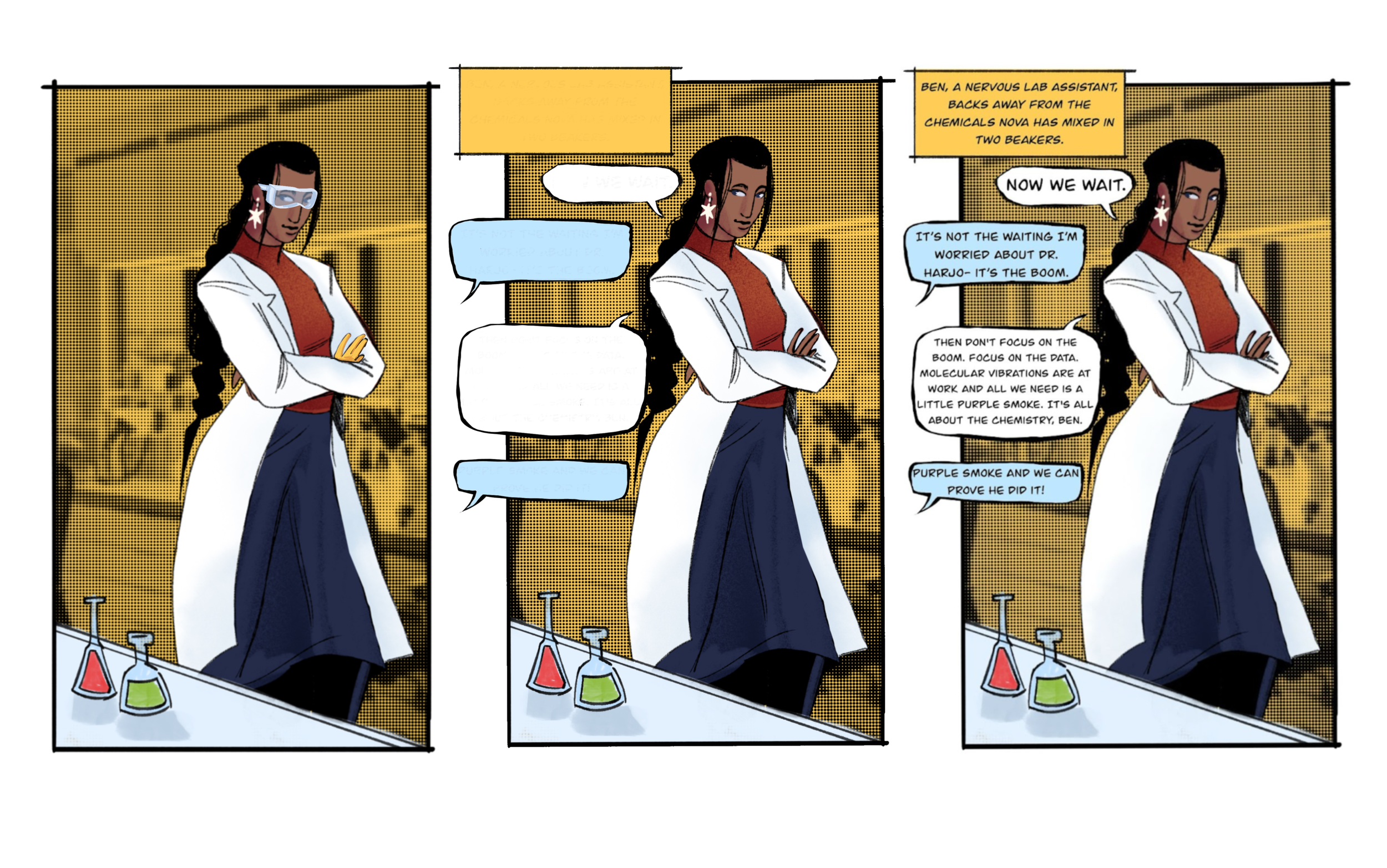
Examples of Nova Panels used in classrooms:
1: A high school student analyzed the body language in the first panel to help surrogate dialogue regarding her own anxiety. That student was struggling to declare a major. The storyline you see here was what she created. We are pleased to report the “real life” student is currently pursuing a career in S.T.E.M. and says the panel workshop opened her eyes to the idea.
2: We also used this sequential panel to teach color theory to middle schoolers. Graphic narratives like this teach students that physical expression is a universal language. Color theory and psychology in comic books help children develop visual literacy, serving as a roadmap to help them understand body language and subtext. By linking non-verbal character actions with deliberate color choices, students learn to decode emotional states, shift focus, and interpret communication beyond dialogue.