
EDUCATIONAL COMIC LIBRARY
Created in the The Honeybell Lab
Working to create fun, innovative, engaging educational content for children of all ages.
Inside The HoneyBell Lab studio meet our team of illustrators, script writers (no AI) and educational advisors who create real-world learning adventures featuring characters and stories kids love to read!
Why Comics Work for Teaching Kids:
“Comics are not a diversion from literacy – they are a dynamic and vital part of it. Our recent research revealed that in the face of steeply declining levels of engagement with reading, children and young people are still drawn to reading materials like comics and graphic novels. It highlights the role of comics and graphic novels as essential tools to (re)ignite enthusiasm in a pastime that is struggling to engage young people.
The research prompts us to consider what is the future of literacy? What counts as “real reading”, and do we need to redefine what it means to be a reader, writer and creator in 2026 and beyond?”
—Lucy Starbuck Braidley, Head of School Libraries at the National Literacy Trust
Ditch dry, dense text widely rejected by today’s digital-native youth and choose an alternative option which doubles retention rates and makes abstract concepts more digestible!
Gutters and The Space Between The Brain Lobes
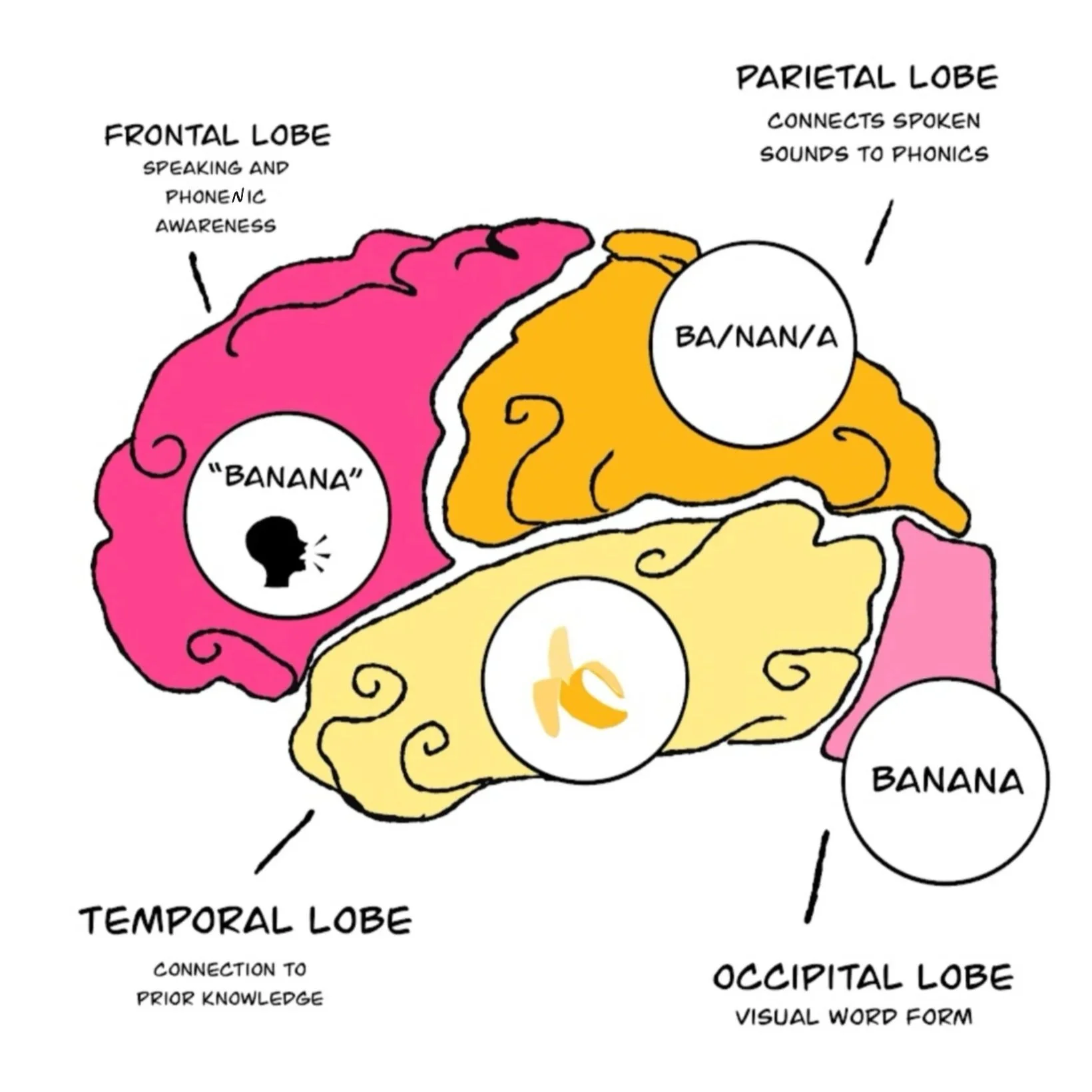
“In the limbo of the gutter, human imagination takes two separate images and transforms them into a single idea”
—Scott McCloud
Understanding Comics: The Invisible Art
“We are all in the gutter, but some of us are looking at the stars”
—Oscar Wilde
The white space you see between each panel in a comic book or a graphic novel is referred to as a gutter.
Think of gutters in comic books as an imaginative playground space.
In the brain, scientists call the space between our brain lobes the sulci—deep grooves between the lobes acting as a kind of structural pause which forces synthesis to activate.
Think of synthesis like this-
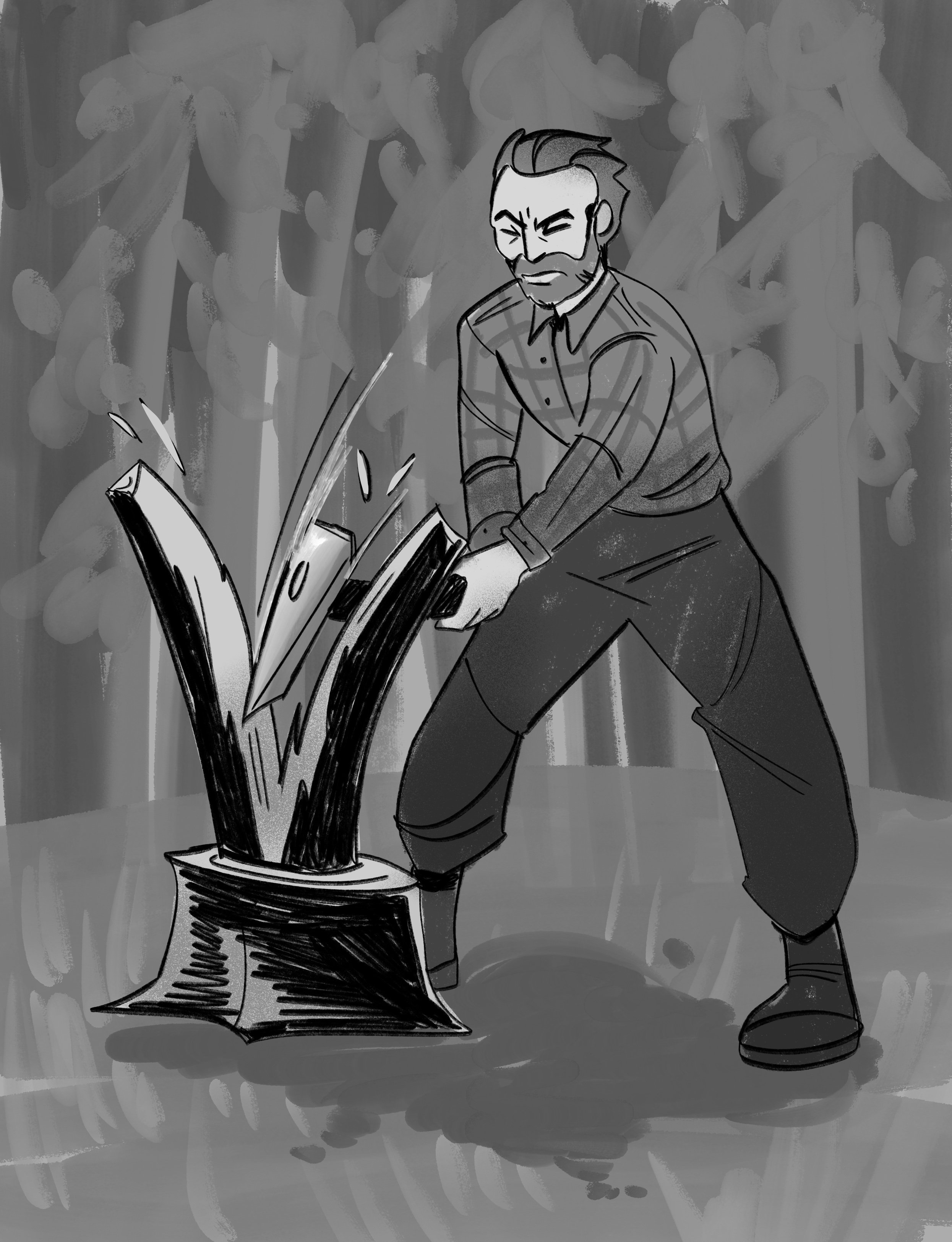
Panel 1: Someone swings an axe to chop wood.
Panel 2: The wood is chopped.
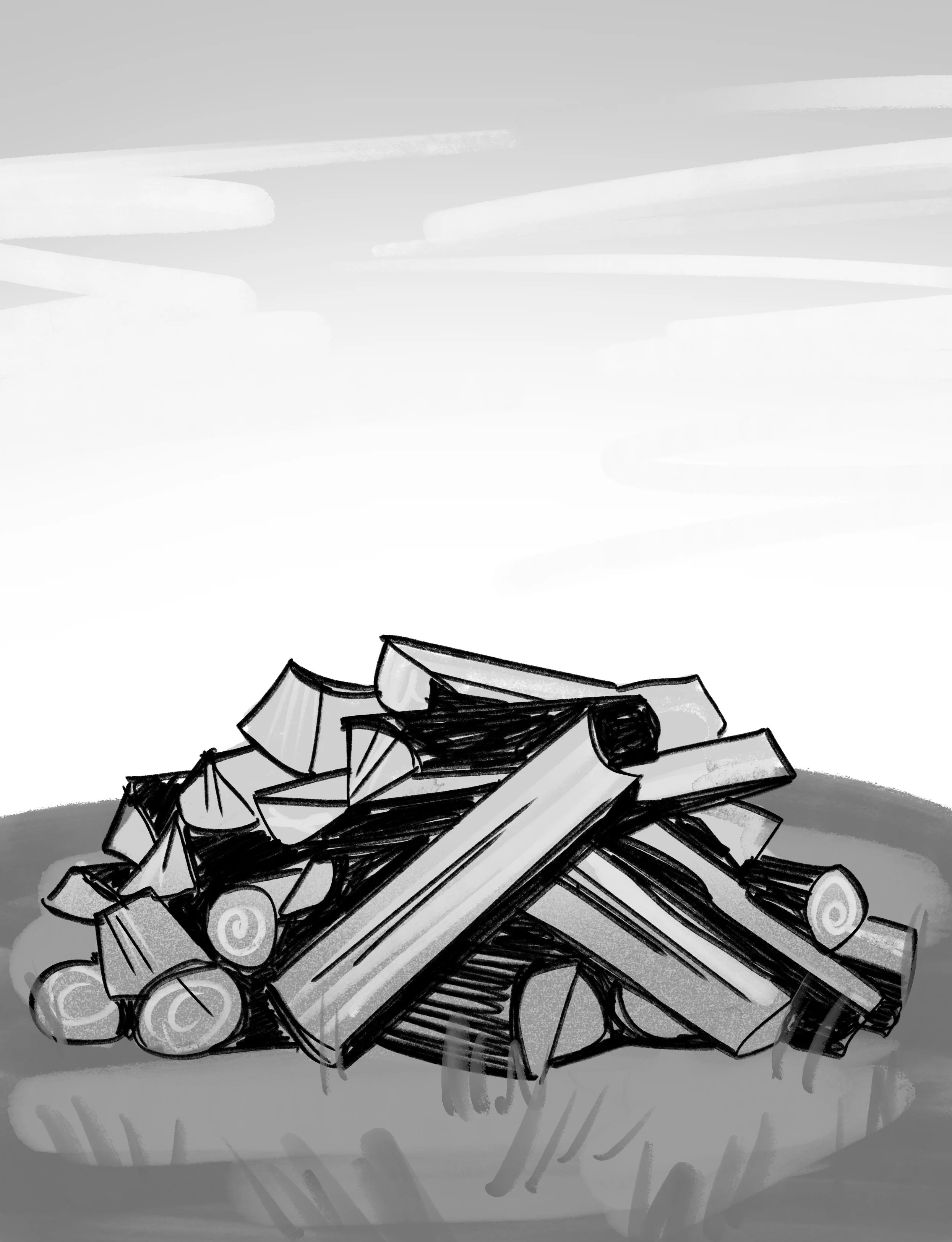
The gutter space between Panel 1 and Panel 2 is the exact space where our young reader becomes the co-creator in the story.
Sulci and gutters work together to allow the brain to decide how fast or slow the wood is being chopped!
Active synthesis becomes a bridge to the wood pile.
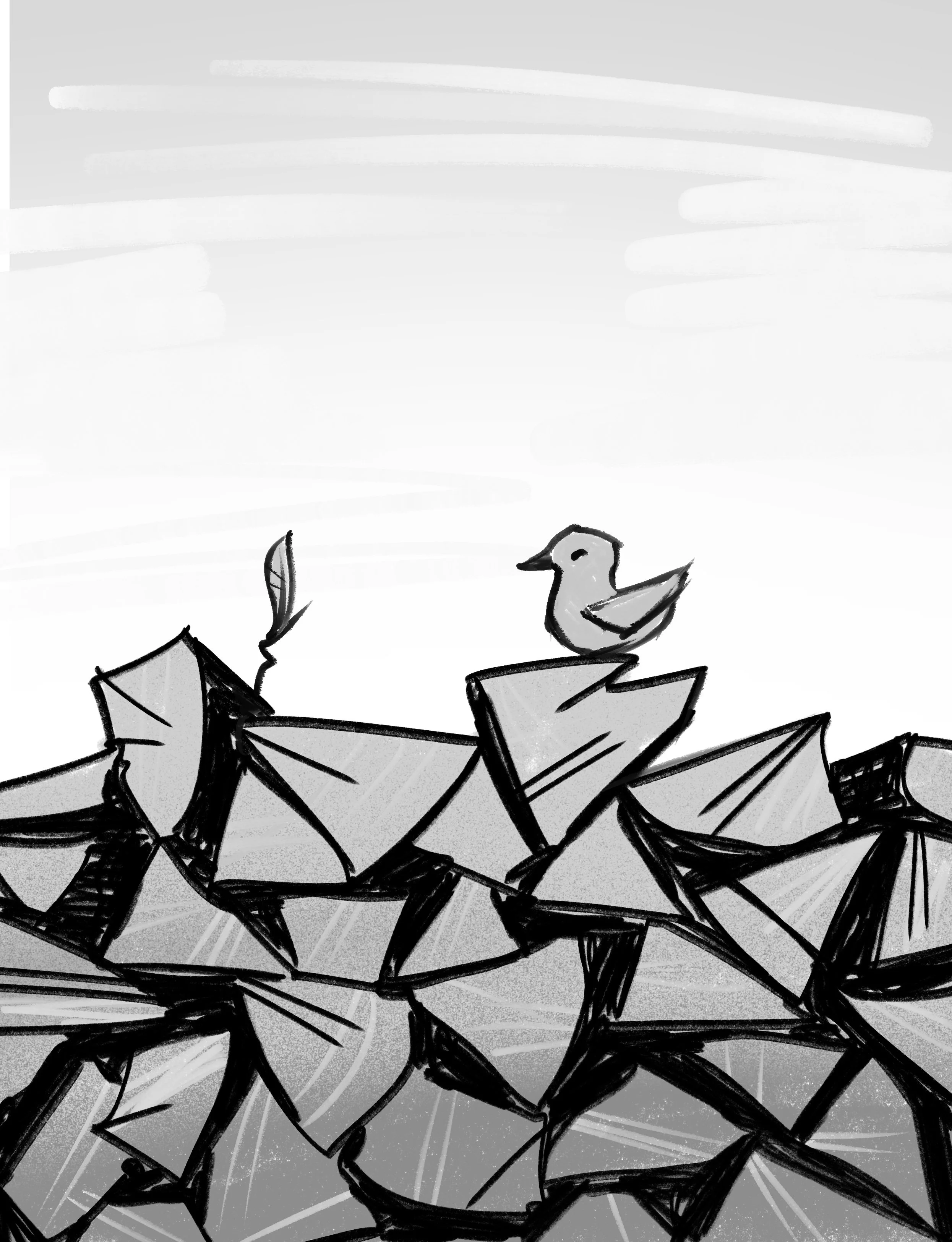
This is where all the other lobes converge or come together to form new neural pathways.
And here—on these pathways —a child’s brain begins to find space for storing, recognizing, and ultimately retrieving words.
Inference and critical thinking happens here.
When the science behind reading meets visually rich compelling storytelling— reading comprehension and language skills develop.
The comic book format supports the idea of allowing young readers to move at their own pace—swinging in their own natural rhythm—reinforcing a love of reading that lasts a lifetime!
Characters + Storyline = Relatability
When young people recognize themselves or someone else from their family, school, or communities— in stories they read—they go from passive recipients to active researchers, self-directing and self-motivating.
Our educational comics transform the learning experience into a place where joy sparks further investigation into real-world phenomena by teaching through comics—a format children love!
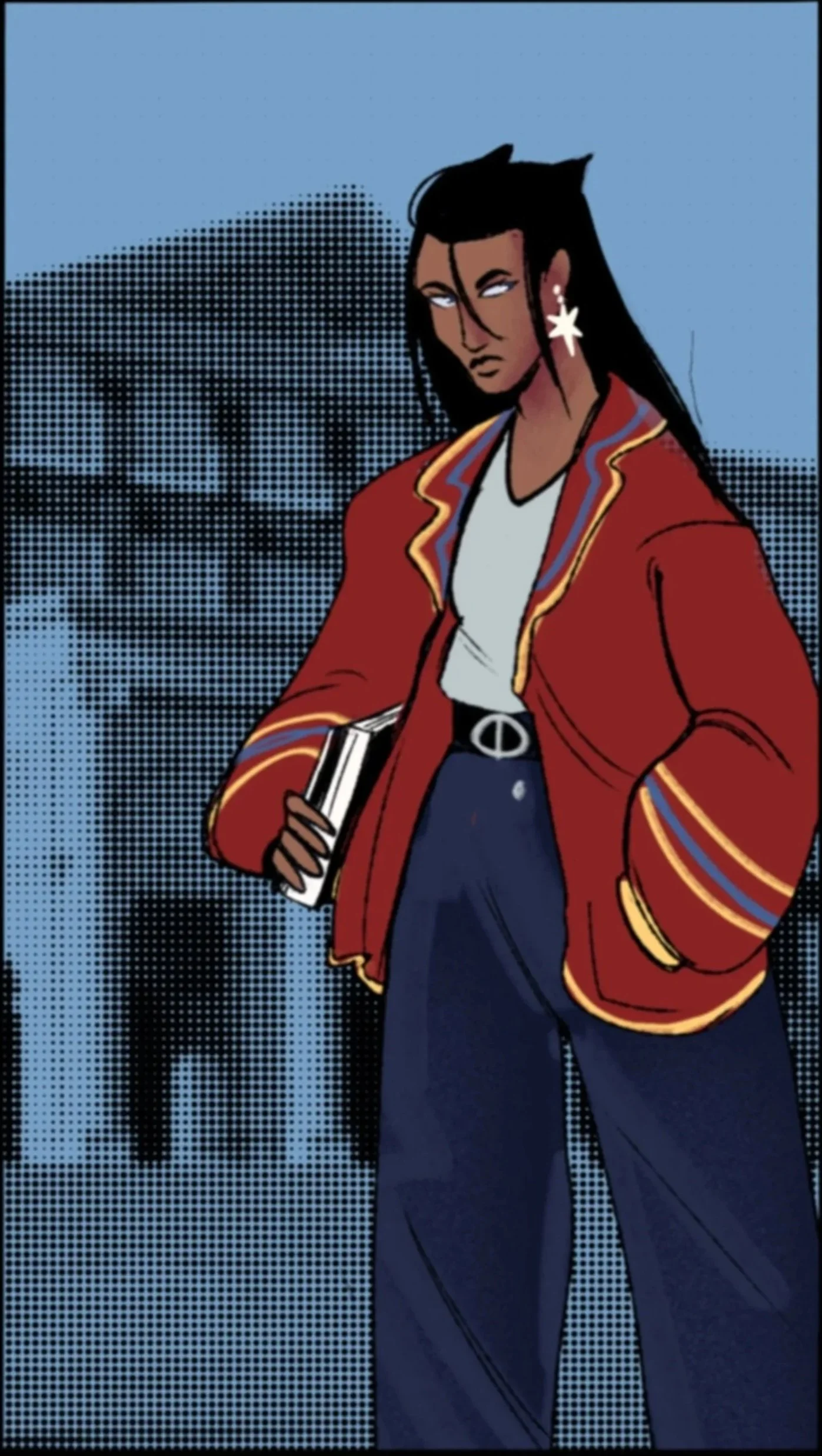
Our superstar character Nova, is one of our most popular, original cast members who was created to be a role model to support the future of Women in S.T.E.M. To learn more, watch this short TED talk here.
Comic books and graphic novels with strong female S.T.E.M. like Nova offer access to role models where there might not be any.
Seeing relatable characters succeed in S.T.E.M. careers shows girls and young women, they too can and should pursue careers in Science, Technology, Engineering, and Math!
Examples of Nova in Action!
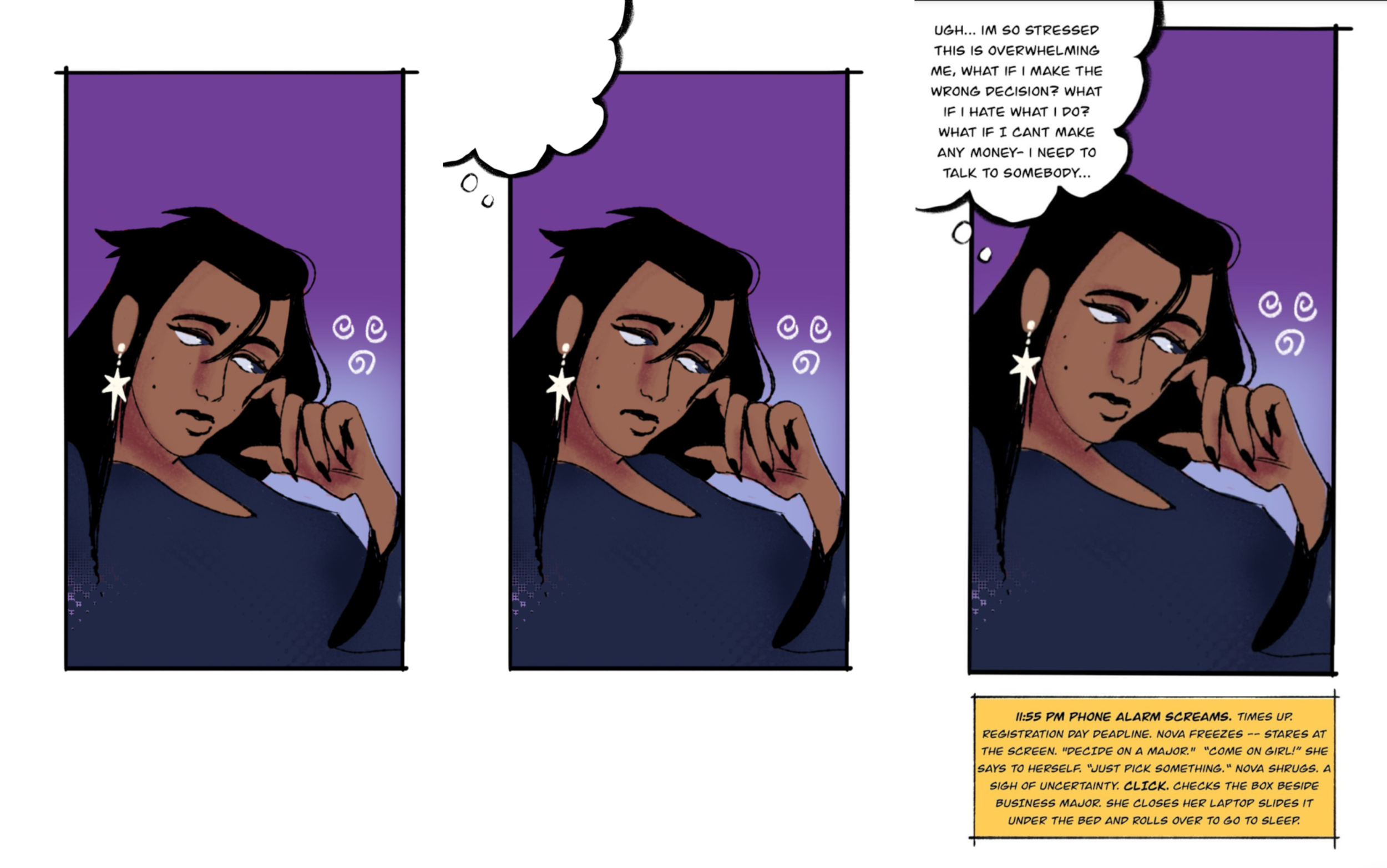
Mia, a senior high school student, analyzed the body language in the Nova sequential narrative comic book Panel 1 to help surrogate dialogue regarding her own anxiety as she struggled to declare a major.
Meet Nova!
The storyline below was created by the student when she was asked to imagine her version of what Nova was thinking based on the colors used and the expression on Nova’s face.
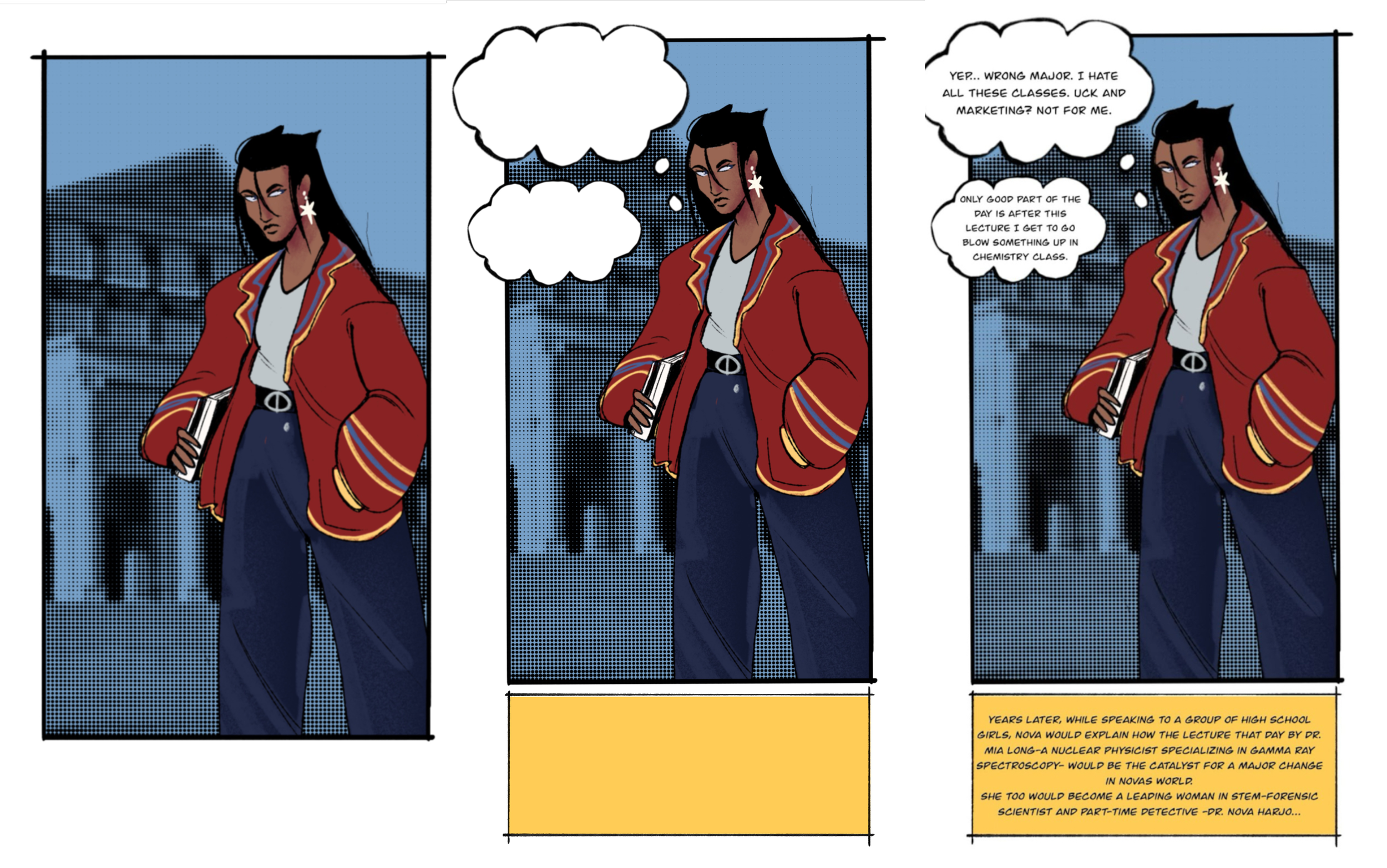
Once our young woman wrote the speech bubble dialogue and the caption below the illustration—our team went to work!
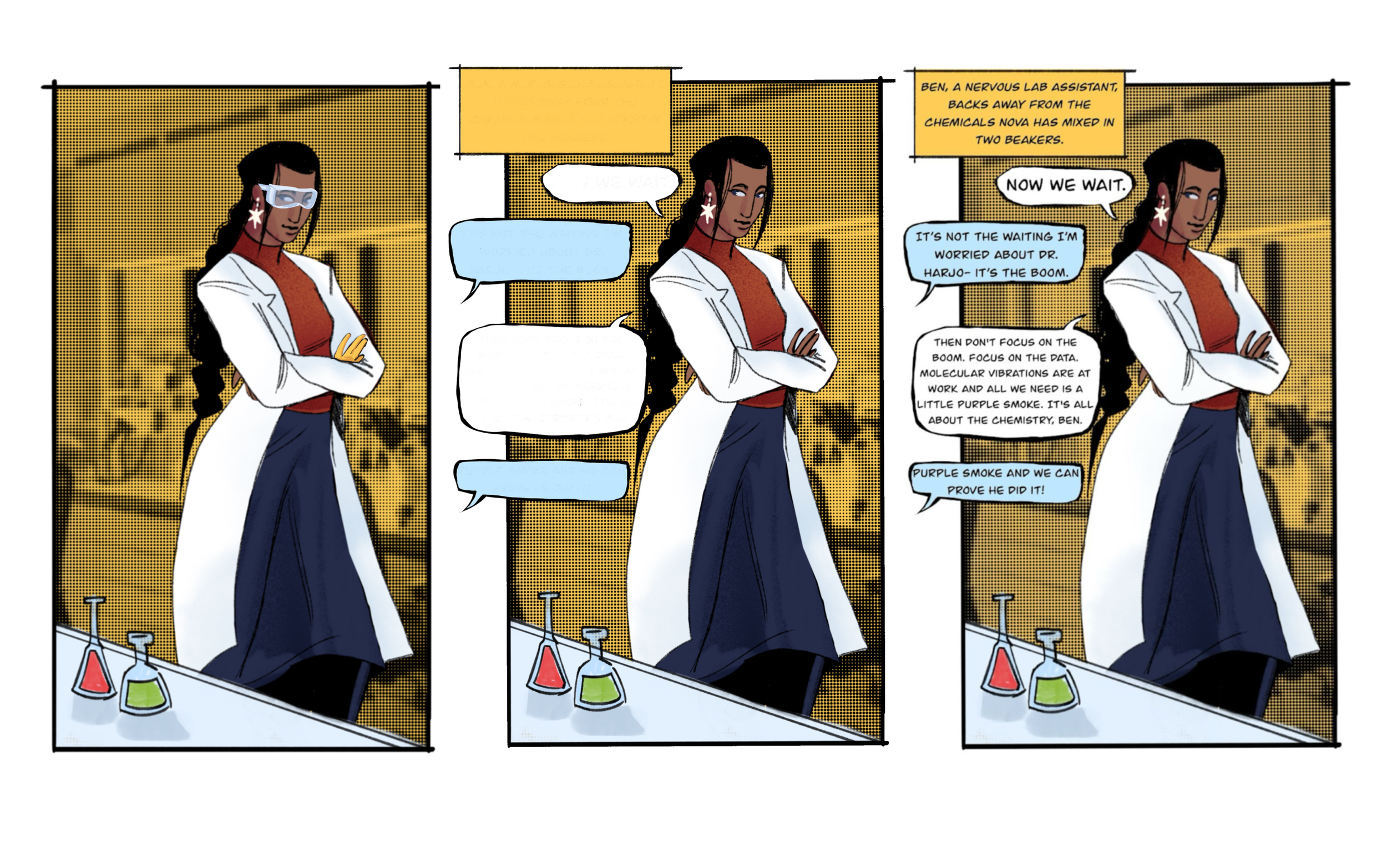
We scripted and illustrated a short narrative detailing Nova’s process for pursuing her soon-to-be-discovered passion for chemistry and eventual S.T.E.M. career.
Boom!
We are pleased to report the “real-life” student is pursuing dreams of a career in S.T.E.M. and Mia reports the panel workshop opened her eyes to the idea!
Teacher Testimony
For Our Partners and The Children and Families They Serve
WE CUSTOMIZE!
Get started here!!
In addition to our educational comic library, we work with our partners to build their own educational comic adventure for their organization and families they serve.
Customizable Visual Narrative Menu